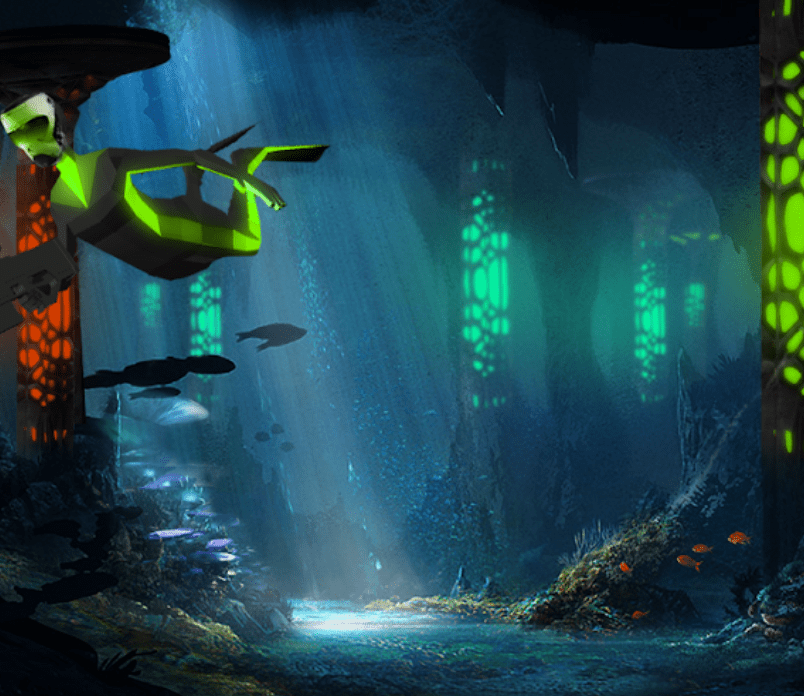
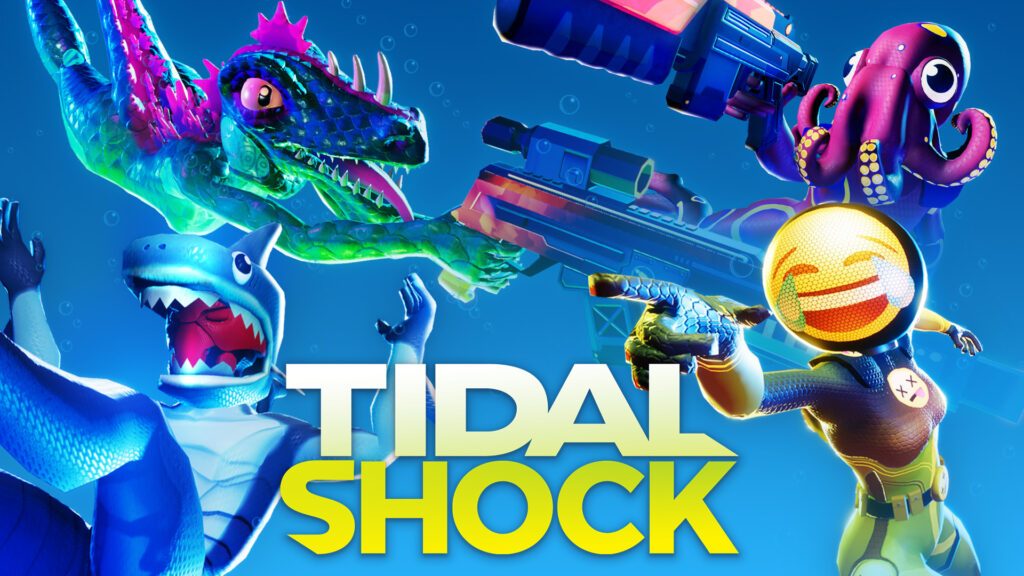
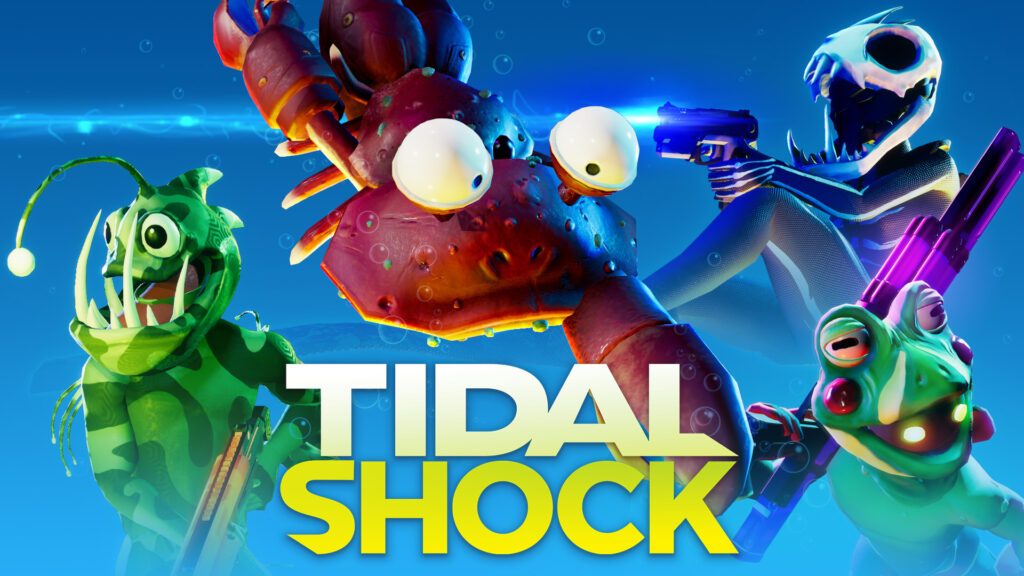
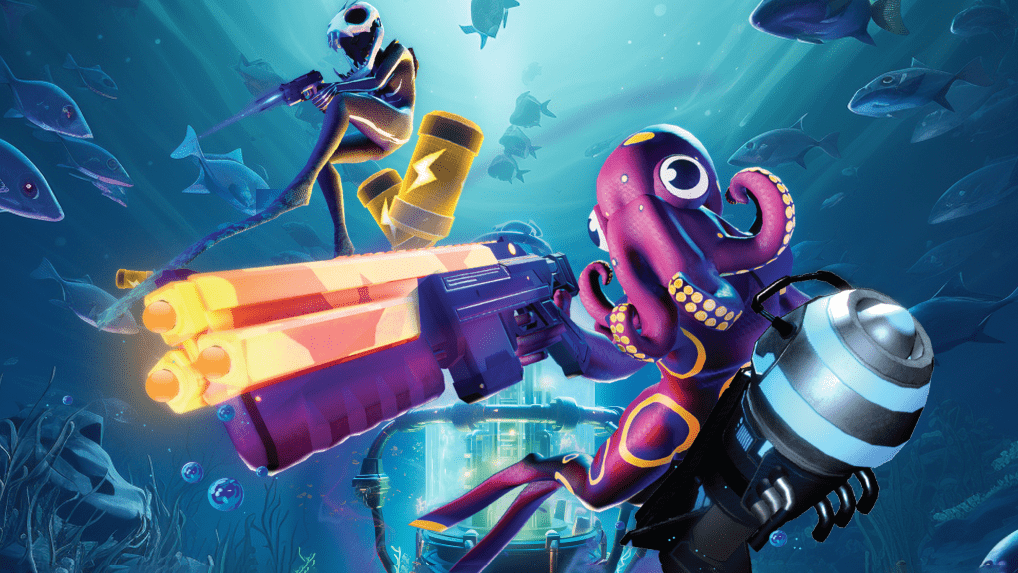
Tidal shock is an underwater arena-shooter where players compete against one another to be the first to collect and deposit a hundred energy modules, using whatever means necessary. Players have access to a wide arsenal of unique firearms and gadgets to use to their advantage.
TASKS:
Handled the game design document, initial level design and mechanics regarding the core game loop, player movement options and gunplay properties, as well as the creation of a few character skins.
CORE DESIGN GOALS:
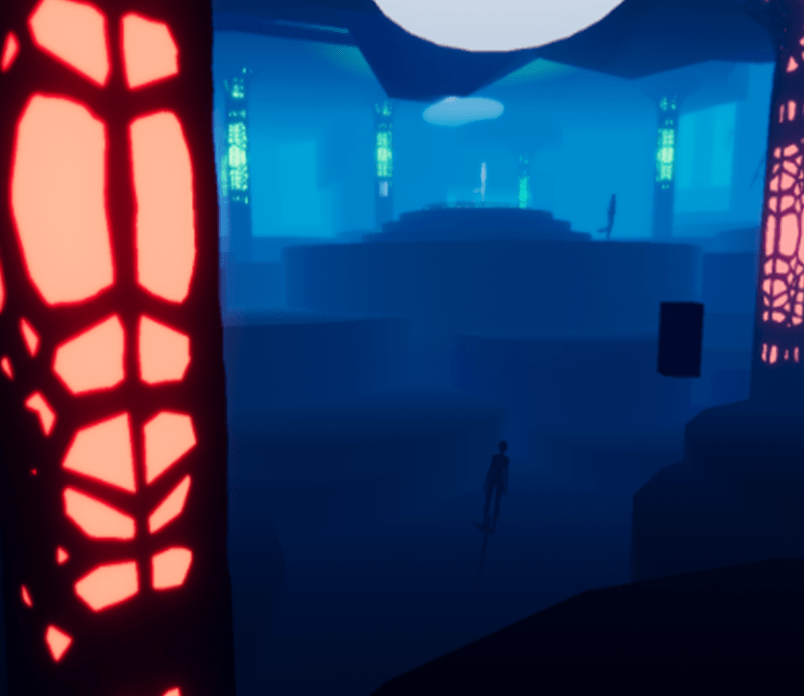
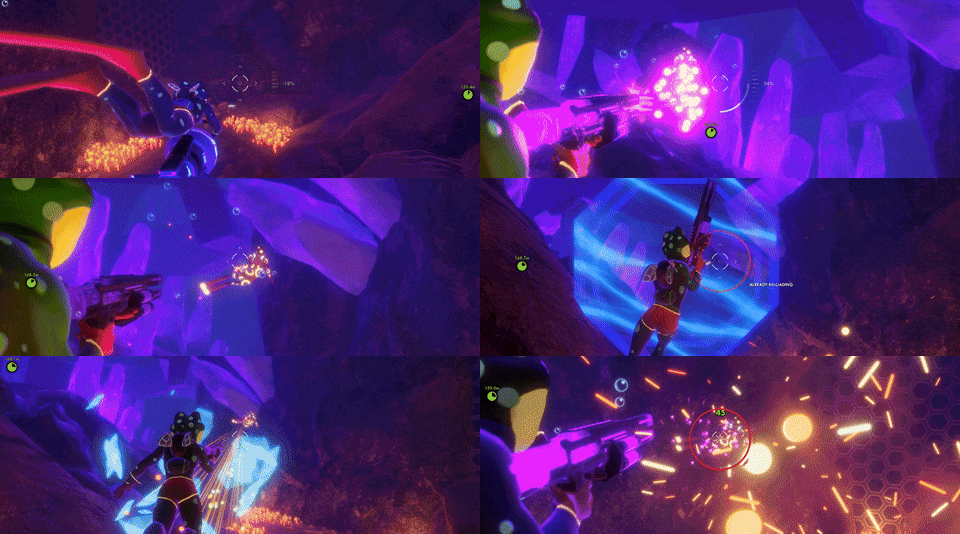
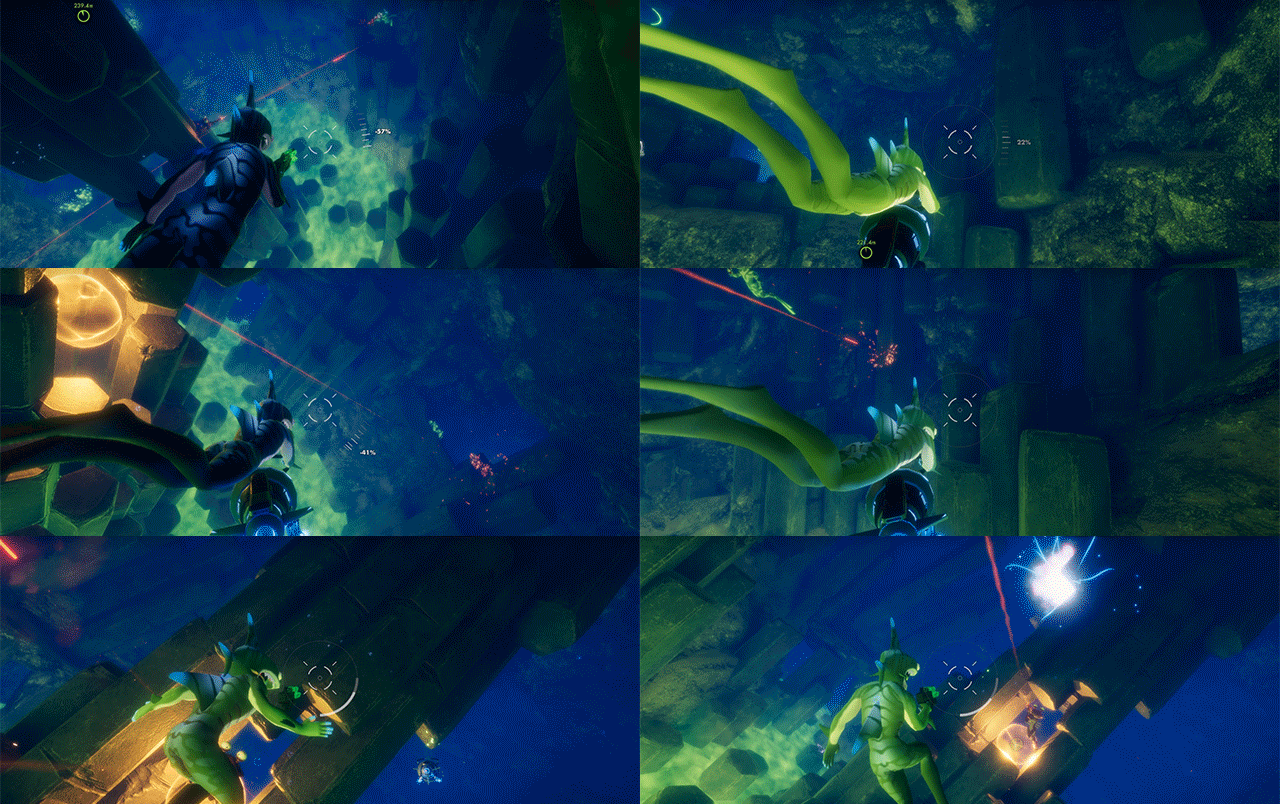
When designing the level areas for third-person shooters, visual clarity on the player’s screen and ample negative space is key for the players to properly register points of interest in the game. Since the setting took place underwater (where the players movements are somewhat floaty and weighted, in addition to being able to traverse vertically at will) shifting the focus on macro details, such as changes in elevation or planes between different partitions of the level and maintaining oversized spaces with high ceilings throughout, would ensure that players would be able to freely maneuver between tunnels or slip into rooms without frustration.
ENCOUNTER DESIGN:
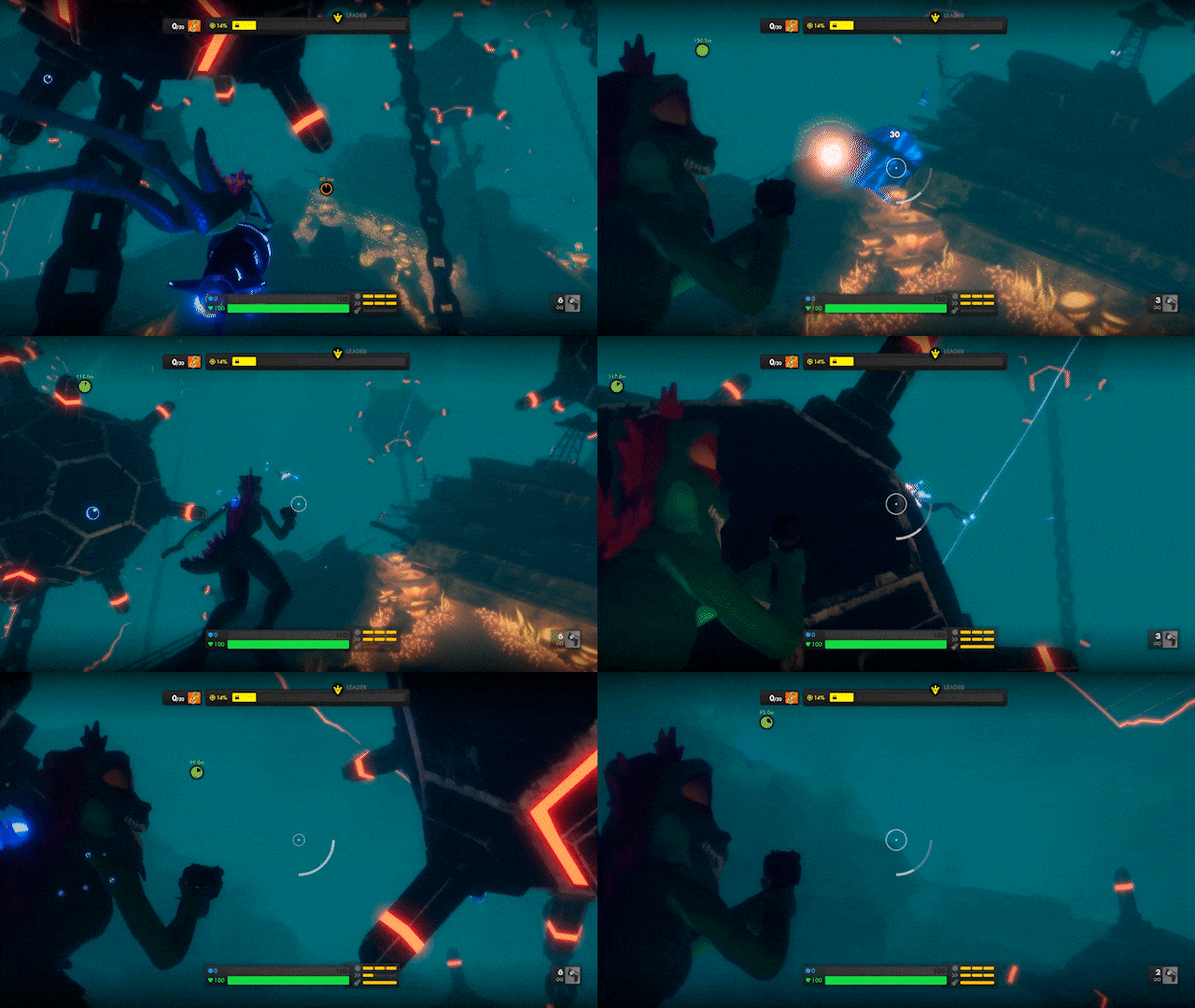
– Elevation shifts and chamber obstacles used to break sightlines and add vertical decision-making. These were done through large mines, chains, different rock arches and crystal formations that doubled as visual anchors within each zone.
– Emissive pillars, gradient fog transitions, particle effects, and glowing conduits form a hierachy of visual guides and distinguishment across spatial pathing options.
– Hotspot zones around points of interest with clear attack lanes, balanced with safe repositioning areas to support varied playstyles and back-to-forth skimirshes.
VISUAL & NAVIGATION SUPPORT:
The usage of emissive colors of the environment work as both navigational markers and a gameplay mechanic to camouflage players – character suits glow in accordance with their velocity, so the faster a player moves across the map the more conspicious they will be to the surrounding peers. The fog contrast, along the use of portal allows players to detect passages and chambers that would otherwise have been obscured or difficult to see for players.
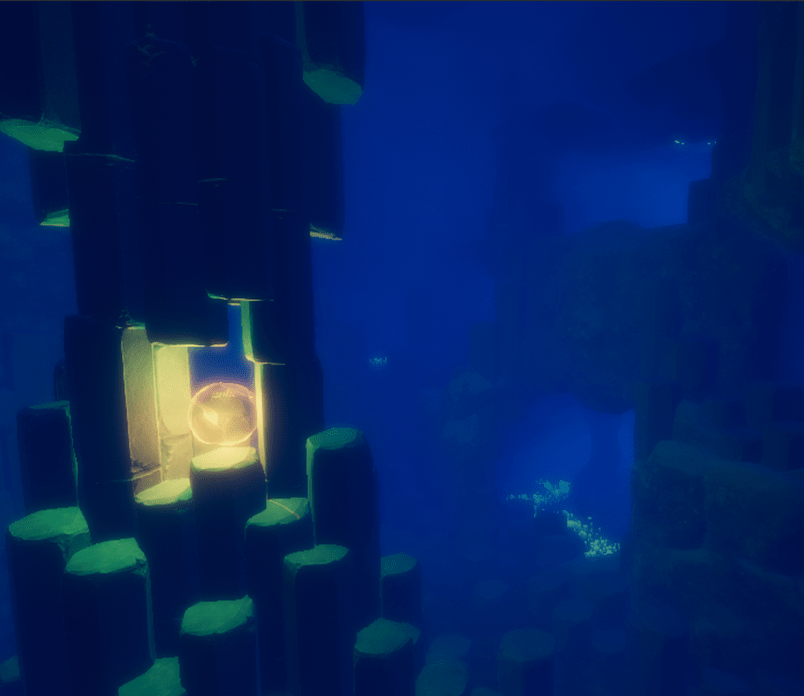
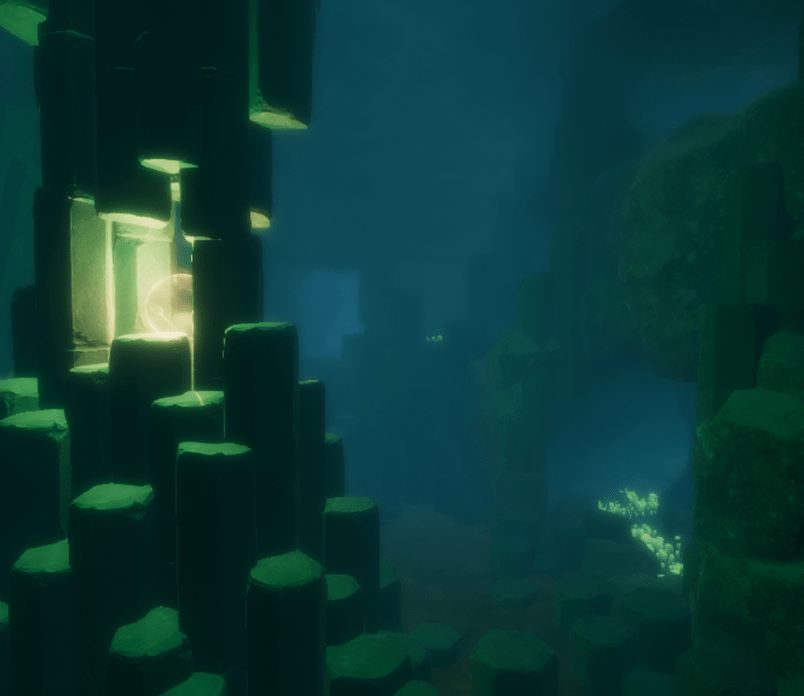
This is similar to the level design philosophy and technical approach that Abzu (an underwater adventure game) took to carving out their game spaces. The idea for portal cards and fog layer shifting allowed them to emphasize passages and affordances for players as they span seemingly boundless bodies of water.
This gradient effect assisted players in being able to maintain a sense of their orientation and spatial positioning during intesnse combat bouts as our game featured omni-directional movement and rotation, the color banding across the vertical length of the levels featured as visual anchorance for them to understand which direction were facing at any given moment.
PROGRAMS USED:
Unity – Blender -Maya – Zbrush – Substance Painter & Designer – Photoshop – Google Docs – Source Tree